The uncomfortable truth about live sea lamprey (Petromyzon marinus) — and the preparation model that Karapau has developed
The risk is not in cooking sea lamprey (Petromyzon marinus) — it is in everything that happens before the pan. True freshness is measured by process control.
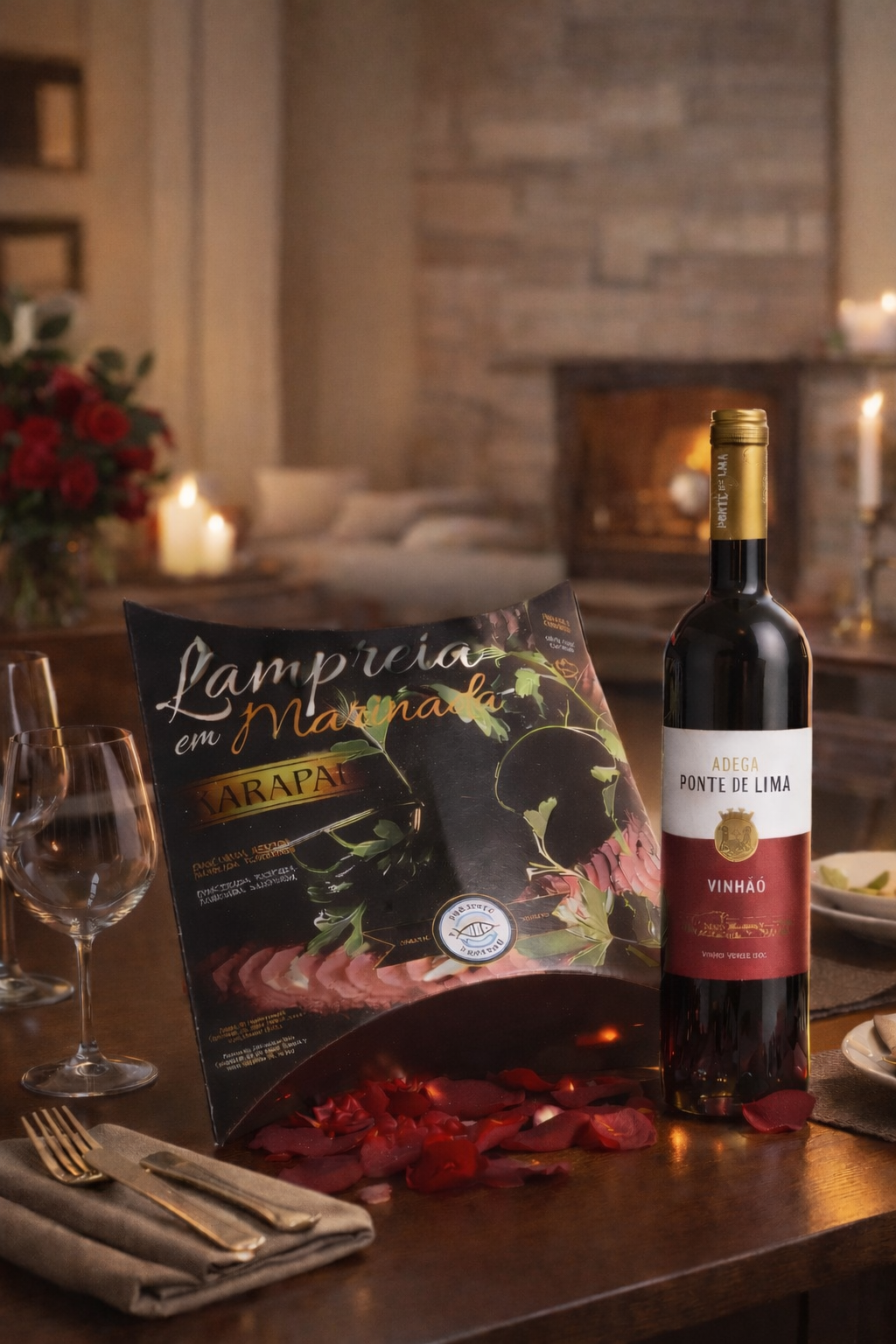
For decades, the idea was repeated almost without question: live sea lamprey (Petromyzon marinus) is synonymous with quality. It is alive, therefore it is fresh. It is fresh, therefore it is better. But this automatic association began to be called into question when scientific knowledge entered an equation that had previously been dominated only by tradition.
The sea lamprey (Petromyzon marinus) is a biologically extreme animal. It has a very high blood load, highly reactive tissues, and a metabolism that responds aggressively to stress. When removed from its natural environment and kept alive outside the river, it quickly enters a state of physiological stress that triggers internal chemical changes that are invisible to the consumer — but which are decisive for the quality, stability, and safety of the food.
This is the point that is rarely discussed: the risk is not in cooking sea lamprey (Petromyzon marinus) — it is in everything that happens before the pan. Even experienced people, who have known how to prepare and cook sea lamprey (Petromyzon marinus) for years, cannot control critical factors at home such as the exact bleeding time, blood exposure, constant temperature, immediate evisceration, and the continuous cold chain. Food science is clear: the earlier the process is controlled, the lower the microbiological risk and the higher the product stability.
It was precisely at this point that a structural change in the sector emerged. KARAPAU developed a model for the preparation and commercialization of sea lamprey (Petromyzon marinus) aimed at facilitating consumer access to a traditional product through preparation, packaging, batch identification, and customer information processes. The process was designed not to facilitate, but to control that which cannot be controlled in a domestic environment.
Unlike the traditional practice of selling live animals, Karapau has implemented a rigorous model: controlled bleeding at the correct time, immediate evisceration, careful sanitization, marination with a technological function (not just gastronomic), vacuum packaging, and complete and transparent labeling. All of this is carried out in a licensed space, with batch traceability and with the food safety requirements applicable to each operation.
The so-called ready-to-cook marinated sea lamprey (Petromyzon marinus) does not eliminate the ritual of cooking. On the contrary: it preserves it. It arrives home already prepared, cleaned, seasoned, and ready to follow the classic method — whether Bordelaise or in rice — without exposure to blood, without animal stress at home, and without invisible risks that could compromise everything.
Today, true freshness is measured by process control, not by the fact that the animal is still moving. Marinated sea lamprey (Petromyzon marinus), ready to cook, directly from fishers/pescadores, prepared professionally, and delivered to your home. Simply sauté, thicken, and serve.
Because honoring tradition also means knowing when science is right.
Editorial note (November 2, 2026). The original title of this article has been replaced by a descriptive formulation and the text has been revised: claims of pioneering status, exclusivity, and certification have been replaced by a description of the procedure adopted by KARAPAU. The original publication date and the content of the article remain on record.
Continue exploring
From the article to the origin, to the products and to the knowledge.
Discover Karapau products or continue to Know More to consult species, legislation, origin, sustainability, and gastronomy.